


Disney Magic in Your Pocket: Revisiting a Handheld Gem
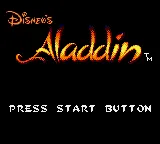
Among the many prototype builds preserved by gaming historians, Aladdin (USA, Europe, Brazil) (En) (Beta) (1994-01-11) stands out as a fascinating artifact from the final stages of development for one of the Game Gear's most beloved platformers. Released internally just weeks before the retail version reached players, this beta build offers a rare look at how Sega and Virgin Games polished Disney's Arabian adventure for handheld audiences. For collectors, preservationists, and retro gaming enthusiasts, it provides valuable insight into an era when platform games were refined cartridge by cartridge rather than updated through downloadable patches.
Based on Disney's blockbuster animated film, Aladdin arrived during a period when licensed games were becoming increasingly ambitious. While the Sega Genesis adaptation earned much of the spotlight thanks to its fluid animation, the Game Gear version carved out its own identity with original level layouts, portable-friendly pacing, and gameplay specifically tailored for handheld hardware.
Today, this beta build remains an intriguing piece of gaming history, demonstrating the final adjustments developers made before launch while showcasing just how much could be accomplished on Sega's colorful portable system.
Aladdin (USA, Europe, Brazil) (En) (Beta) (1994-01-11): A Window Into Development
Prototype versions provide something retail cartridges cannot: a glimpse into the creative process itself. The January 11, 1994 beta represents a build remarkably close to completion, yet careful examination reveals differences that help historians understand how the final product evolved.
Developers in the 16-bit era constantly tweaked enemy placement, collision detection, platform spacing, and visual assets. Unlike modern games that receive post-launch updates, every adjustment had to be finalized before cartridges entered production. This makes beta builds especially valuable because they preserve development decisions that would otherwise disappear forever.
For preservation communities, comparing this beta to the retail release is similar to studying an early film cut. Small differences often tell a larger story about balancing, performance optimization, and design priorities.
Running Through Agrabah: The Gameplay Behind the Magic
At its core, Aladdin is a side-scrolling action platformer that captures the adventurous spirit of the film while introducing unique challenges designed specifically for gaming audiences.
Players guide Aladdin through bustling marketplaces, dangerous rooftops, mysterious caverns, and the legendary Cave of Wonders. Every stage combines platforming challenges with enemy encounters that require quick reflexes and precise movement.
Key Gameplay Mechanics
- Running and jumping across complex platform layouts.
- Collecting gems, lives, and bonus items.
- Avoiding environmental hazards and traps.
- Defeating enemies through timing and positioning.
- Navigating hidden routes and secret areas.
One of the game's greatest strengths is its pacing. Stages are designed to accommodate shorter handheld play sessions without feeling simplified. The result is a game that remains engaging whether played for five minutes or an entire afternoon.
The beta version occasionally reveals subtle balancing differences. Certain jumps, enemy patterns, or item placements may vary from the final release, offering a unique challenge even for players familiar with the retail cartridge.
A Portable Adventure Built for Replayability
Many early handheld games struggled with repetition, but Aladdin avoids this trap through varied environments and steadily escalating difficulty. Each stage introduces new obstacles, requiring players to master timing rather than relying solely on memorization.
The challenge feels authentic without becoming frustrating. While some sections demand precision, the controls remain responsive enough that failures usually feel earned rather than caused by poor design.
Pushing the Game Gear Beyond Expectations
The Sega Game Gear was a technically impressive handheld for its era, featuring a full-color screen that far exceeded many competitors. Aladdin took full advantage of those capabilities.
Character sprites are large, detailed, and instantly recognizable. Aladdin's animations successfully convey personality despite the system's modest resolution. Backgrounds are packed with visual detail, helping recreate the atmosphere of Agrabah and other iconic locations from the film.
The game also demonstrates clever resource management. Memory limitations forced developers to maximize every available byte, yet the final result feels surprisingly rich and vibrant.
Technical Highlights
- Smooth character animation for a portable platformer.
- Colorful backgrounds with strong visual variety.
- Efficient sprite handling that minimizes slowdown.
- Responsive controls with very low input lag.
- Faithful adaptations of musical themes from the movie.
Some minor sprite flickering appears during busy scenes, but this was a common compromise on handheld hardware of the era. Overall performance remains remarkably consistent throughout the adventure.
The soundtrack deserves particular praise. The Game Gear's audio hardware was limited, yet the composers managed to create memorable renditions of themes inspired by the animated film, enhancing the sense of immersion.
Modern Emulation: Playing Aladdin Today
Thanks to modern emulation, experiencing this prototype is easier than ever. Accurate Game Gear emulators preserve the original gameplay while introducing enhancements that improve convenience without compromising authenticity.
Recommended Emulator Settings
- Use Genesis Plus GX or Gearsystem for excellent compatibility.
- Enable integer scaling for sharp pixel presentation.
- Activate save states when exploring prototype content.
- Reduce latency settings for the most responsive controls.
- Avoid aggressive texture smoothing that blurs sprite artwork.
On modern displays, the game scales exceptionally well. When upscaled to 4K using integer scaling, sprite artwork remains crisp and vibrant. CRT shaders can add subtle scanlines and LCD simulation effects for players seeking a more authentic presentation.
Portable hardware such as the Steam Deck, Odin 2, and various retro handheld devices provide an ideal way to experience the game. Since Aladdin was originally designed for portable play, it feels perfectly at home on modern handheld systems.
If visual glitches occur, switching emulation cores or enabling more accurate rendering settings typically resolves the issue. Beta software occasionally exposes emulator compatibility quirks that retail releases do not.
The Lasting Legacy of Sega's Arabian Adventure
More than three decades after its creation, Aladdin remains one of the strongest Disney platformers available on Sega hardware. While the Genesis version often receives the majority of attention, the Game Gear adaptation has earned its own loyal following among collectors and preservationists.
Prototype builds like this one contribute significantly to the game's historical importance. They help document the development process while providing enthusiasts with new material to explore and analyze.
The game's influence can still be felt in later Disney platformers, many of which adopted similar approaches to level design, animation quality, and accessibility. Meanwhile, speedrunners continue examining every route, jump, and optimization opportunity within both prototype and retail versions.
For retro gamers interested in preservation, development history, or simply enjoying a well-crafted platformer, this beta remains a fascinating chapter in the story of Disney gaming.
Frequently Asked Questions About Aladdin (USA, Europe, Brazil) (En) (Beta) (1994-01-11)
What makes this beta different from the final release?
The beta may contain altered enemy placements, level adjustments, graphical differences, and balancing changes that were modified before the commercial version shipped.
What is the best emulator for playing this prototype today?
Genesis Plus GX, Gearsystem, BizHawk, and Kega Fusion all offer excellent Game Gear compatibility and accurate emulation performance.
How to fix glitchy textures in Aladdin (USA, Europe, Brazil) (En) (Beta) (1994-01-11)?
Use accurate rendering settings, disable incompatible graphical enhancements, and ensure your emulator is updated to the latest version.
Does the game look good on modern handheld devices?
Absolutely. The game runs flawlessly on devices like the Steam Deck and Odin 2, while high-resolution scaling preserves the sharp pixel-art presentation that made the original Game Gear version so visually impressive.


